Custom Lighting Design

Not Sure What Lighting Would Actually Work Best in Your Home?

Most homeowners do not need more lighting everywhere. They need better lighting in the places that matter.

Maybe your kitchen has one bright fixture in the middle but the counters still feel dark. Maybe your living room is fine during the day but relies on lamps at night. Maybe you are remodeling, choosing fixtures, or adding recessed lights and want to make sure the final result feels intentional instead of random.

That is where custom lighting design comes in.

A good home lighting design looks at how you use each room, where light is needed, what should feel softer or more focused, and how the fixtures will work together. Whether you're interested in LED lighting design, smart lighting design, dimmable lighting design, or accent lighting design, the right lighting plan for home projects can be as simple as planning a few new lights in one room or as detailed as creating a complete layout for an entire home.

For homeowners in Cumming, GA, the goal is not to overcomplicate the project. It is to help you make confident choices before buying fixtures or starting electrical work.

Do You Need Help Choosing Lighting, or Do You Already Have a Vision?

Both situations are completely normal.

Some homeowners know exactly what they want: recessed lighting in the kitchen, pendant lights over the island, a chandelier in the dining room, under-cabinet lighting, or smart dimmers throughout the house.

Others know the room feels off but are not sure why.

Custom lighting design can help with either starting point. It can answer questions such as:

  • Would recessed lights work better than a central fixture?
  • How many lights should go in this room?
  • Where should pendant lights be placed?
  • Is under-cabinet lighting worth adding?
  • Should the lights be on dimmers?
  • What color temperature will look best?
  • Can the existing ceiling and wiring support the plan?
  • Will the lighting work with the furniture, cabinets, and layout?

Illustration of a person sitting on a stool working with tools and hanging light fixtures in a modern workspace

The best lighting plan is usually not about one "perfect" fixture. It is about making the room easier to use and more comfortable to be in.
How Lighting Design Works

A practical lighting plan usually considers three types of lighting.

General Lighting

General lighting gives the room its overall brightness. Recessed lights, ceiling fixtures, and flush-mount fixtures are common examples.

Task Lighting

Task lighting helps where you need to see clearly: kitchen counters, bathroom vanities, desks, laundry areas, and reading spaces. Under-cabinet lighting and pendants are common choices.

Accent Lighting

Accent lighting adds depth and atmosphere. It can highlight artwork, shelves, fireplaces, landscaping, or architectural details without making the entire room overly bright.

Not every room needs all three. A good lighting design uses what makes sense for the space instead of adding fixtures just to fill the ceiling.

Lighting Design Ideas by Room

Kitchen Lighting Design

Kitchens are one of the most common places where homeowners want better lighting. A good kitchen lighting design often combines general lighting, task lighting over counters, and focused lighting over an island or table. Recessed lighting, pendants, and under-cabinet lighting can work together to reduce shadows and make the room more functional.

Living Room Lighting Design

Living rooms need flexibility. Bright lighting can be useful for cleaning, reading, or hosting guests, while dimmable lighting creates a more relaxed feel in the evening. A lighting plan may include recessed lights, wall sconces, floor lamps, or accent lighting around shelves and feature walls.

Bathroom Lighting Design

Bathroom lighting needs to be practical. Vanity lighting is important because a single overhead fixture can create shadows around the face. Properly rated recessed lights can also be used in the main bathroom area and, when appropriate, in shower spaces.

Bedroom Lighting Design

Bedrooms often benefit from warm, dimmable lighting. Bedside lights, ceiling fixtures, recessed lighting, and smart controls can make the room more comfortable at different times of day.

Entryway, Hallway, and Stair Lighting

These spaces are easy to overlook, but good lighting can make a home feel safer and more welcoming. Recessed lights, wall fixtures, and well-placed ceiling lights can improve visibility without making the area feel harsh.

Outdoor Lighting Design

Outdoor lighting can improve visibility around entrances, walkways, patios, and driveways. It can also highlight landscaping and make outdoor spaces more usable after dark. Outdoor fixtures and wiring need to be selected for the environment and installed safely.

What Color Temperature Should You Choose?

Color temperature changes the feel of a room more than many people expect.

2700K — warm and soft

Often preferred for bedrooms and living rooms.

3000K — balanced warm-white

A popular choice for kitchens, hallways, and common areas.

4000K — brighter and cooler

Often useful for garages, laundry rooms, and workspaces.

Many homeowners use 3000K as a consistent choice through much of the home, but the right option depends on the room, finishes, and personal preference.

Do You Need Dimmers or Smart Lighting?

Dimmers are one of the simplest ways to make lighting more flexible. They let the same room feel bright when you need it and softer when you do not.

Smart lighting can add scheduling, app control, and compatible voice control. It can be useful for homeowners who want lights to turn on at certain times, manage outdoor lighting, or control multiple areas more easily.

The fixtures, bulbs, and switches need to be compatible. Choosing them as a system helps avoid flickering, buzzing, or unreliable dimming.

Can You Design and Install Lighting Yourself?

You can absolutely plan the look and feel of your own lighting. Many homeowners start with inspiration photos, fixture ideas, and a clear sense of how they want a room to feel.

The electrical installation is where the project can become more involved.

Adding new fixtures, recessed lights, dimmers, smart switches, outdoor lighting, or under-cabinet lighting may require new wiring, junction boxes, ceiling access, and circuit evaluation. Heavy fixtures may need properly rated support. Bathroom and outdoor fixtures need the right ratings for moisture exposure.

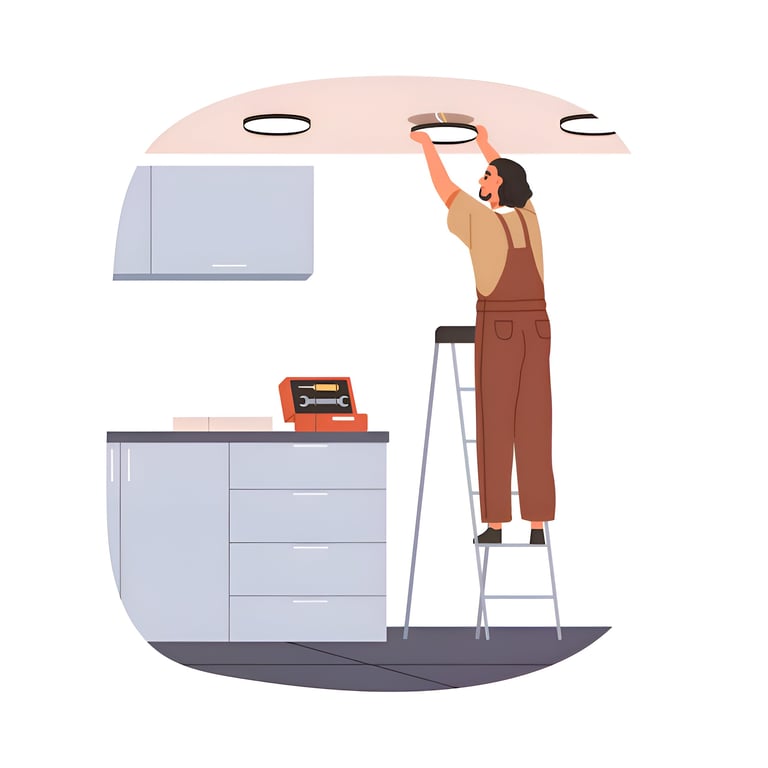
Worker installing recessed ceiling light while standing on ladder in kitchen with cabinets and tools

If the project involves new wiring, opening ceilings or walls, working inside the electrical panel, or uncertainty about the existing electrical setup, it is usually worth having a licensed electrician handle the installation.

When It Makes Sense to Bring in an Electrician

A lighting electrician can help when you need:

Recessed Lighting Layout

Plan fixture placement and spacing before cutting into the ceiling

New Wiring & Fixture Locations

Run new electrical cable and install junction boxes safely

Chandelier & Pendant Installation

Properly rated support for heavy or decorative fixtures

Under-Cabinet Lighting

Clean, hidden wiring for kitchen and workspace task lighting

Dimmers & Smart Switches

Compatible dimmer and smart lighting installation

Bathroom & Outdoor Lighting

Moisture-rated fixtures installed safely for wet areas

Fixture Support & Circuit Capacity

Confirm your electrical system can safely handle the new load

Lighting Plan Before Purchasing

Get a practical plan so you buy the right fixtures the first time

This is especially useful when you want the work completed quickly and cleanly without guessing about wiring, ceiling access, or fixture compatibility.

Bringing Your Lighting Plan to Life

Once you know what you want, the installation should be straightforward, well-planned, and built around your home.

Hot Spot Electrical provides custom lighting design Cumming GA homeowners trust, along with comprehensive lighting design services, residential lighting design, and interior lighting design for homeowners in Suwanee, Sugar Hill, Dawsonville, Coal Mountain, North Forsyth, and nearby communities. As a trusted lighting electrician Cumming GA, we handle everything from lighting placement to full installation.

Whether you need help choosing a lighting plan or already have the fixtures ready, we can assess the space, explain what is practical, and complete the electrical work with quality workmanship and clear communication.

Hot Spot Electrical | 3935 River Run Ct., Cumming, GA 30041

(678) 771-6085

Frequently Asked Questions