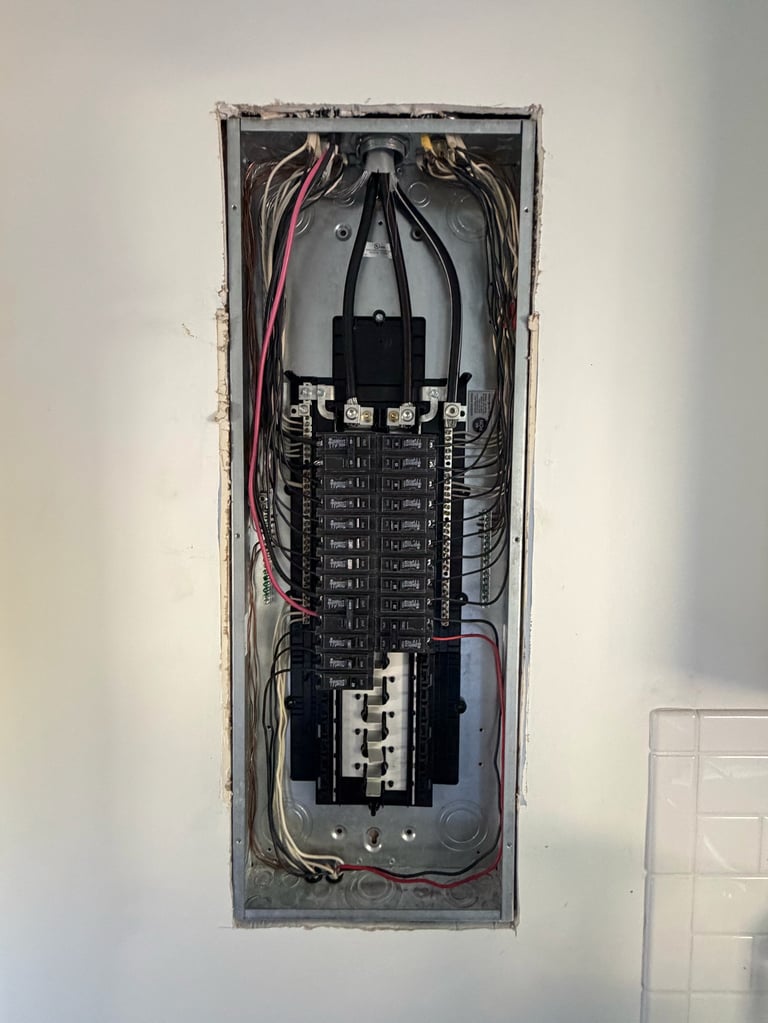
Whole House Surge Protector DIY Guide
Legally, in most cases no, and practically it is not worth the risk. A panel mounted whole house surge protector has to be wired into your main electrical panel on a dedicated breaker, which means opening a live service panel. In most North Atlanta jurisdictions that work requires a licensed electrician and often a permit. It also voids many connected equipment warranties if it is done by anyone else.
There is one genuine DIY option: a plug-in surge protector or power strip for individual devices. That is fine. Wiring a device into your service panel is not the same job. At Hot Spot Electrical, we install whole house surge protectors across Cumming and North Atlanta and size them to the panel, so the protection actually works during a surge.
Adding a breaker and landing conductors inside a service panel looks simple in a video. In practice, it is one of the more dangerous tasks in a home. Here is what you are actually signing up for:
The main lugs stay energized even with the main breaker off. One slip near them is a shock or arc flash hazard, not a tripped breaker.
Most jurisdictions require a licensed electrician for panel work, and many require a permit and inspection. Unpermitted work can complicate insurance and a future sale.
The device, the breaker, and the conductor length all have to match your service. A mismatch means the unit trips offline or fails during the exact surge you bought it for.
Connected equipment warranties almost always require professional installation. A DIY install can wipe out the coverage that was the main reason to buy the unit.
Loose neutrals, corrosion, double tapped breakers, and recalled panels are common in older North Atlanta homes. An electrician catches them before adding anything.
A proper install ends with a voltage check, torque on the terminations, and a status indicator verification. Skipping that is how quiet failures happen.
There are real do it yourself wins in surge protection. They just all live outside the electrical panel:
A whole house unit protects the whole service. A strip protects one outlet. Both have a place, but only one of them belongs in your panel.
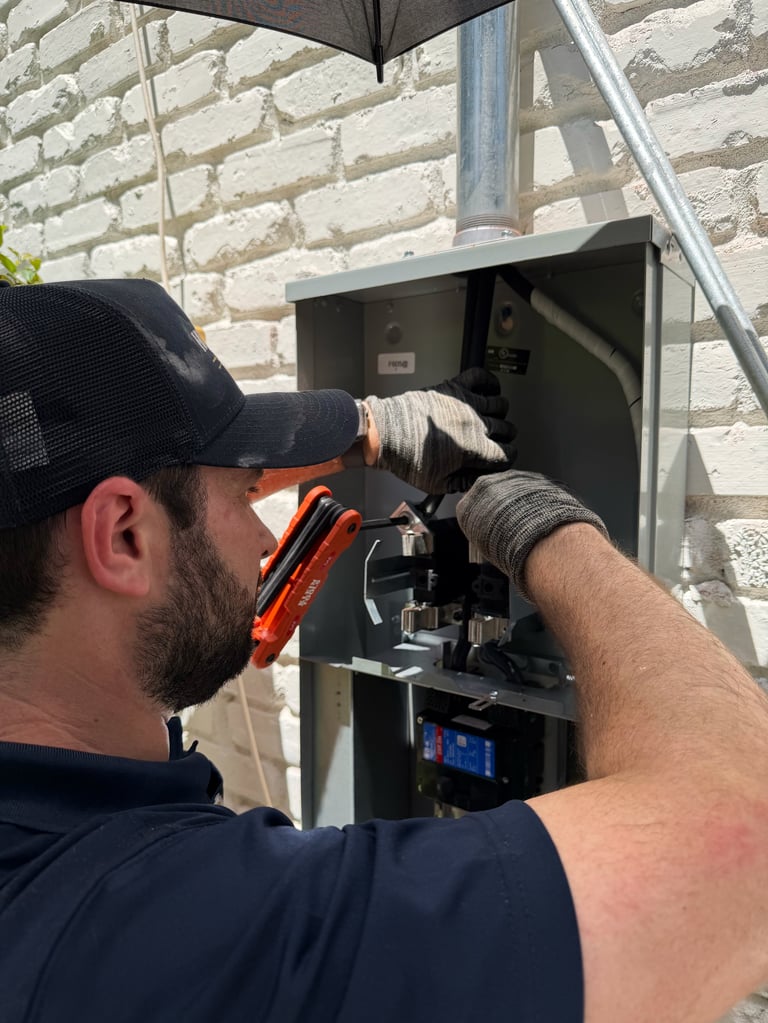
We check service size, grounding, breaker condition, and available space. Anything unsafe gets flagged before a new device goes in.
We match the kA and joule rating to your service and load, and pick a unit that fits your panel brand and breaker type.
Dedicated breaker, correct conductor size, straight short leads, and proper bonding. We confirm permit requirements and handle the paperwork.
We verify the indicator lights, record the model and rating for your records, and show you what to check after a storm.
Saving the labor on a DIY or bargain install usually costs more later. These are the warning signs worth stepping away from:
In most North Atlanta jurisdictions, no. Panel mounted surge protection requires working inside a live service panel and typically requires a licensed electrician plus a permit. Even where it is not explicitly banned, the safety risk, the warranty void, and the insurance exposure make it a bad trade.
Shock, arc flash, a damaged service panel, a failed device, or an install that quietly does nothing during a surge. We have also seen loose terminations that heat up over time. That is a fire risk sitting behind a closed panel door.
Most connected equipment warranties require installation by a licensed professional. A DIY install can void the coverage, which defeats the purpose of buying a unit with a strong warranty in the first place.
Plug-in surge strips, outlet level protectors, and coax or data line protection are all easy and safe. You can also map your breakers and note any warm or discolored spots to show an electrician. The panel itself is where we take over.
Most straightforward installs take a few hours or less once we are on site. If the panel needs work first, we walk you through that before adding the surge protector. Call (678) 771-6085 and we will schedule it.