Whole House Surge Protection Guide

Is It Worth It to Get a Whole House Surge Protector?

For most North Atlanta homeowners, yes, it is worth it. A whole house surge protector typically costs $300 to $1,000 professionally installed, and it guards every appliance, HVAC system, and electronic device in your home against the power surges that quietly wear equipment out. When you compare that one-time cost against replacing a furnace, a refrigerator, and a stack of computers after a single storm, the math usually favors protection.

At Hot Spot Electrical, we install whole house surge protectors at the panel in Cumming and across North Atlanta so your entire home is covered from one point. If you are tired of dead outlets, blinking clocks, and electronics that fail too early, this is a conversation worth having with a licensed electrician.

What a Whole House Surge Protector Actually Does

A surge protector installed at your main panel sits between the power coming in from the grid and everything plugged in inside your home. Here is what that protection is really worth:

Protection for Every Circuit

One device at the panel covers outlets, lights, and hardwired equipment across the whole house, not just the one strip under your desk.

Electronics Last Longer

TVs, computers, and smart home gear are sensitive to small surges that never flip a breaker. Those repeated hits are what shorten their lifespan.

HVAC and Appliance Coverage

Your air conditioner, furnace, well pump, and refrigerator contain control boards that are expensive to replace and vulnerable to voltage spikes.

Storm and Grid Events

Lightning, tree limbs on lines, and utility switching all send spikes into your panel. A surge protector absorbs them before they reach your devices.

Protects Large Loads Too

EV chargers, hot tubs, and pool pumps pull heavy current. Surge protection helps guard the equipment you invested in.

Cheap Insurance

A few hundred dollars up front against thousands in appliance replacement is one of the better returns in home maintenance.

The Real Cost of Doing Nothing

Surge damage rarely announces itself. It shows up as a dead control board, a freezer that quits after a storm, or a computer that will not boot. Here is what a single event can cost you:

  • HVAC control board: often $500 to $1,500 to diagnose and replace
  • Refrigerator or freezer: $1,000 to $3,000 plus spoiled food
  • Home office electronics: computers, monitors, and networking gear add up fast
  • Insurance gaps: many policies limit surge claims or require a deductible that eats the benefit
  • Hidden damage: small surges slowly degrade equipment until it fails years earlier than it should

Compared to a professionally installed whole house surge protector, one appliance replacement usually costs more than the protection itself.
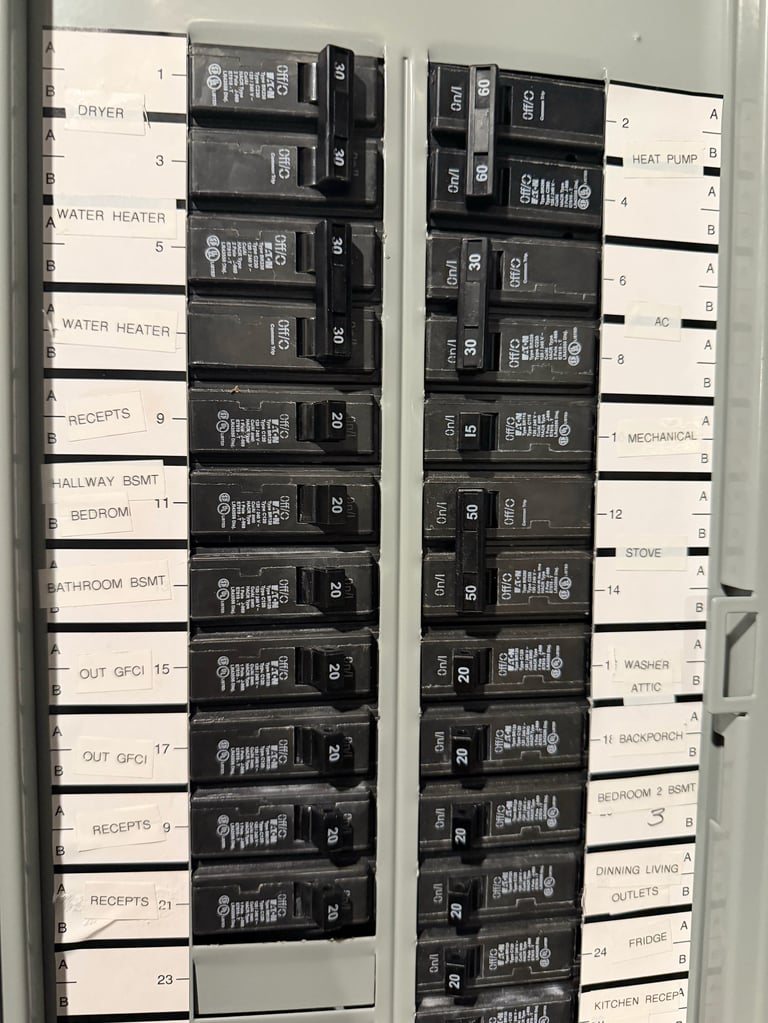
Open residential electrical panel showing circuit breakers and labeled circuits for dryer, water heater, outlets, and various rooms

How We Install a Whole House Surge Protector

This is not a plug-in strip you mount on the wall. A whole house unit wires directly into your electrical panel, which is why a licensed electrician should do it:

1

Inspect the Panel

We check available space, breaker configuration, and grounding so the surge protector can be installed safely and correctly.

2

Size It to Your Home

We match the device to your service size and load so it handles your home's demand without being undersized.

3

Wire It In Properly

A dedicated breaker and correct wiring protect the unit itself, so it keeps working when the next surge hits.

4

Verify and Explain

We test the install, show you the status indicator, and explain how to know when the cartridge needs replacement.

When Cheap Becomes Expensive

A surge protector is only as good as the install behind it. Cut corners here and you can end up with a device that does nothing when it matters. Watch for these warning signs:

  • A plugged-in strip sold as whole house protection
  • No permits, insurance, or license verification
  • An undersized unit that trips off during the first real surge
  • No written scope, warranty, or explanation of the device rating
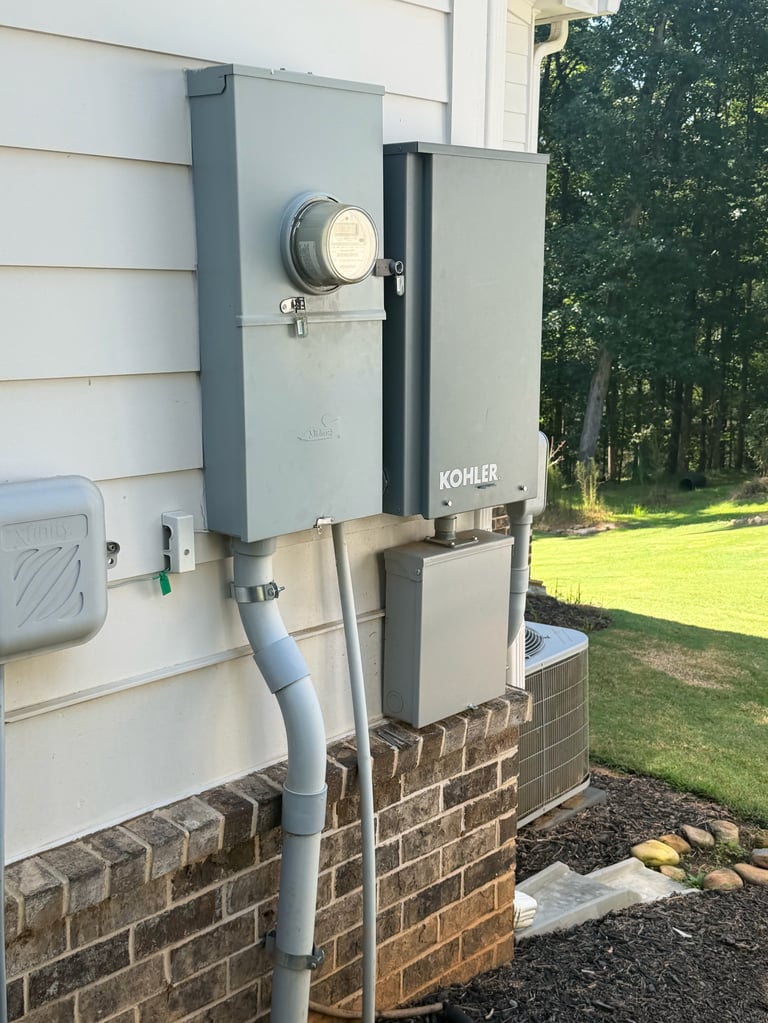
Kohler generator unit mounted on brick foundation next to white siding house with utility meter and gray conduit pipe

Related Electrical Services

Areas We Serve

Frequently Asked Questions