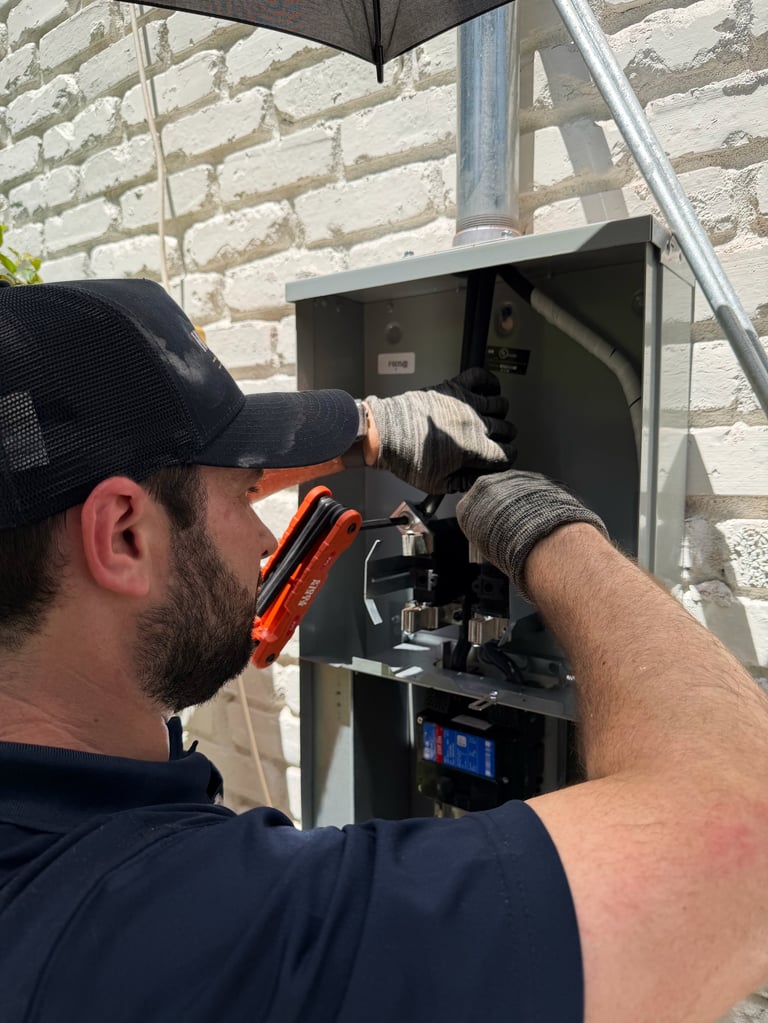
Whole House Surge Protector Sizing Guide
For most North Atlanta homes, the right size is a panel mounted whole house surge protector rated at 50 kA to 80 kA of surge current per phase, or roughly 1,000 to 3,000 joules, matched to a 200 amp service. Homes with long service runs, well water pumps, a large HVAC load, or heavy electronics benefit from the higher end of that range.
The number on the box is only half the answer. The device also has to match your service amperage, fit your panel, and be installed on the correct breaker. At Hot Spot Electrical, we size and install whole house surge protectors across Cumming and North Atlanta, so you get a unit that actually clamps the surge instead of tripping offline during it.
Surge protector sizing is not one number. It is a mix of ratings, service size, and how exposed your home is. Here is what we look at before recommending a unit:
Measured in kA per phase, this is how much surge the device can absorb in one hit. Higher is better, and 50 kA and up is a solid residential starting point.
Joules describe total energy absorbed over the unit's life. For whole house units, look for roughly 1,000 joules minimum and 2,000 to 3,000 for stronger protection.
A 100 amp service supports a smaller unit than a 200 amp service. The device and its breaker have to be compatible with your panel and main.
Long overhead service drops, rural feeders, and homes on the end of a line see more surges. Exposure pushes the recommendation up a tier.
Heat pumps, well pumps, EV chargers, home offices, and medical equipment all raise the stakes. More sensitive load means you should not undersize.
Lower clamping voltage protects electronics better, and a strong connected equipment warranty is worth more than a few extra kA on paper.
These are the ranges we see most often for North Atlanta homes. A licensed electrician confirms the final number after looking at your panel:
If a device carries a big joule number but a low surge current rating, do not be impressed. The kA rating is what handles the strike.
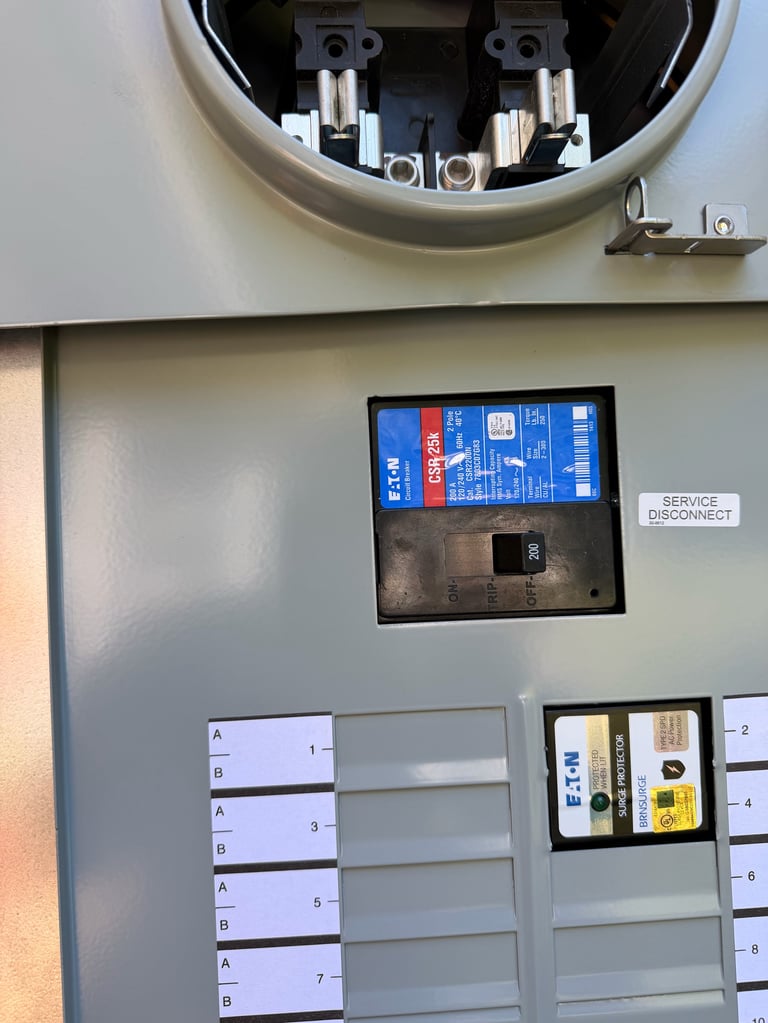
We check the service size, breaker layout, grounding, and available space. Corrosion or loose connections get flagged before anything is added.
We size the kA and joule rating to your service and load, then choose a device that fits your panel brand and breaker type.
Dedicated breaker, correct conductor size, short and straight leads, and proper bonding. Permits and inspection are handled when required.
We verify the indicator lights, document the model and rating, and show you what to check after a storm.
Buying the wrong size or the wrong installer costs more than doing it right once. These are the warning signs we see most often:
For most homes on a 200 amp service, a panel mounted unit rated at 50 kA to 80 kA per phase with roughly 1,500 to 3,000 joules is the right range. Smaller services and larger, high load homes move that number down or up. An electrician confirms it after inspecting your panel.
No. Joules describe total energy absorption over the life of the unit. The surge current rating in kA and the clamping voltage tell you more about how it performs during an actual event. Look at all three, not just the biggest number on the box.
A larger unit does not damage your home, but it can be a waste of money. The device still has to match your panel, breaker type, and service. We size it to your actual load instead of selling you the most expensive model on the shelf.
Yes, for sensitive electronics. A whole house unit handles the main event, but small surges inside the home still reach your devices. Outlet level protectors for computers, TVs, and medical equipment add a second layer for $20 to $80 each.
Yes. We inspect the panel, check your service size and grounding, and recommend a specific device and rating in writing. Call (678) 771-6085 and we will set up a time.