Recessed Lighting Installation

Can You Install Recessed Lighting Yourself?

Kitchen recessed lighting can make cooking easier, living room recessed lighting can make a family space feel more open, and a dark hallway or basement can get the light it has always needed without adding another lamp or bulky fixture. Whether you're considering LED recessed lighting, LED can lights, or slim LED wafer lights, the finished result looks clean: a flush fixture that blends into the ceiling. It is also one of those projects that can look simple from the outside: cut a hole, connect a light, and turn it on.

For homeowners in Cumming GA and surrounding North Atlanta communities, the reality depends on what you are starting with. If you are replacing existing recessed lights with similar LED fixtures, that may be a manageable project for an experienced homeowner who knows how to safely shut off and verify power. If you are adding brand-new recessed lights in an existing ceiling where there are no fixtures already, the job can become much more involved. And that's when a recessed lighting electrician can make a real difference. This guide can help you understand what's involved before deciding whether to take on the can light installation yourself or have a licensed professional handle it.

Are You Replacing Lights or Adding New Ones?

This is the biggest difference. A recessed lighting replacement, swapping older fixtures for LED retrofit lights or newer LED can lights, is usually the simpler project. The wiring and ceiling opening are already there, so the work may be limited to confirming the fixture is compatible, safely disconnecting the old light, and installing the replacement.

Before replacing anything, make sure the correct breaker is turned off, power is verified off at the fixture, the new fixture is compatible with the existing housing, the fixture is rated for the location (especially for bathroom recessed lighting or recessed lights in shower areas where moisture is a factor), and your dimmer switch is compatible with LED lighting.
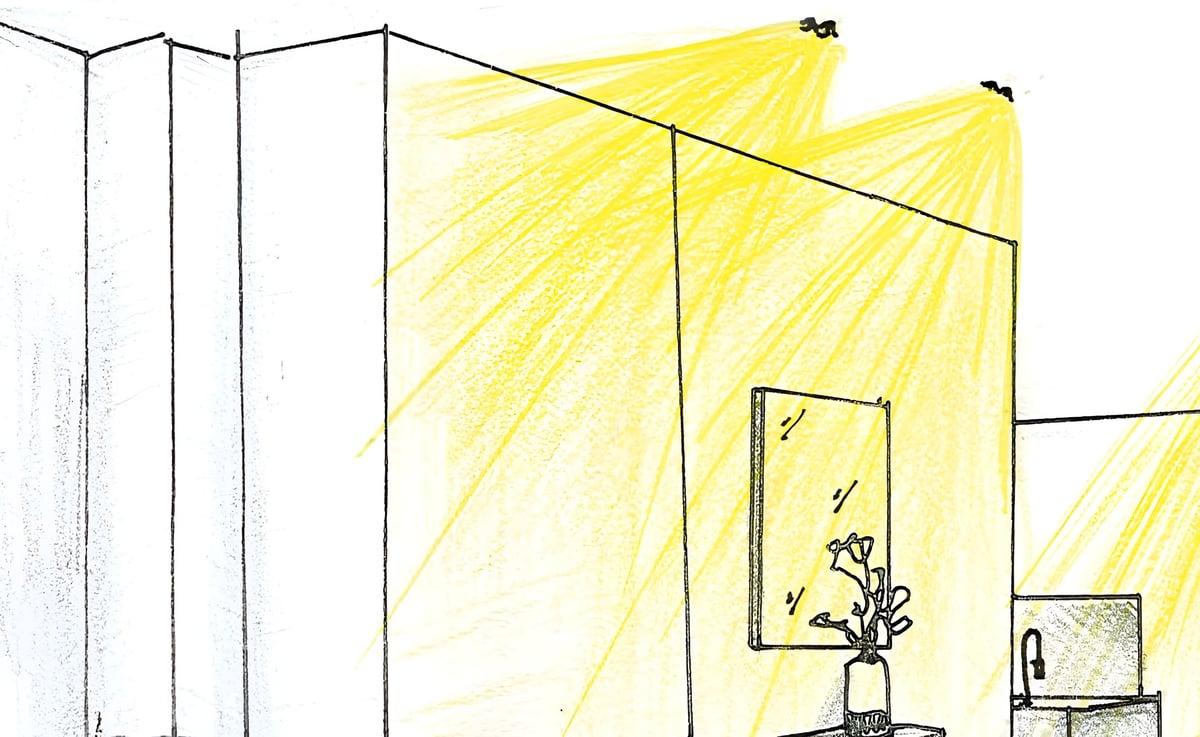
Architectural diagram showing interior space with track lighting casting yellow beams onto walls, with potted plant and furniture sketched on right side

Adding new recessed lighting, whether it's a wafer light installation in a finished basement, kitchen recessed lighting in a remodel, or basement recessed lighting in a newly finished space, is different because there is no existing wiring or opening to work from. A new installation may involve planning a recessed lighting layout, finding ceiling joists before cutting, checking for ducts, pipes, and other obstructions, running new electrical cable, installing junction boxes, connecting a new or existing switch, confirming the circuit has enough available capacity, and choosing fixtures that are safe for insulation and the room conditions. This is where a project can take much longer than expected, especially in a finished ceiling with no attic access.
What a Proper Installation Requires

Before buying fixtures or cutting into the ceiling, it helps to answer a few practical questions. Here's what a proper installation actually requires.

Locating ceiling joists and checking for ducts, pipes, and obstructions. Critical for recessed lighting without attic access

Running new electrical cable and installing junction boxes

Choosing fixtures rated for insulation contact. Essential for recessed lights in insulated ceilings

Connecting dimmable recessed lights, smart recessed lighting controls, and confirming circuit capacity

A quick evaluation helps determine what is possible in your space and where the lights will make the biggest difference. Improper installation can lead to loose connections, damaged ceilings, unreliable operation, or safety concerns. If you're ready to explore your options, schedule an evaluation today.

Why Proper Installation Matters

Recessed lighting should look simple when it is finished. That clean result usually comes from careful planning before the first hole is cut. Poor installation can lead to lights placed too close together or too far apart, incompatible LED lights and dimmers that flicker or buzz, overloaded circuits, fixtures not rated for insulation creating safety issues, and visible ceiling damage that requires unexpected repairs.

There's also the question of layout. Many homeowners ask how many recessed lights do I need? And the answer is that more lights do not always mean better lighting. In reality, the right recessed lighting layout depends on how the room is used. In a kitchen, the goal is often to light counters, the sink, and the island without creating shadows. In a living room, the goal may be softer, even lighting that can be dimmed at night. Recessed lighting color temperature matters too. Choosing between 2700K vs 3000K recessed lighting affects whether a room feels warm and cozy or bright and functional. In a hallway, a few well-spaced lights may be all that is needed.

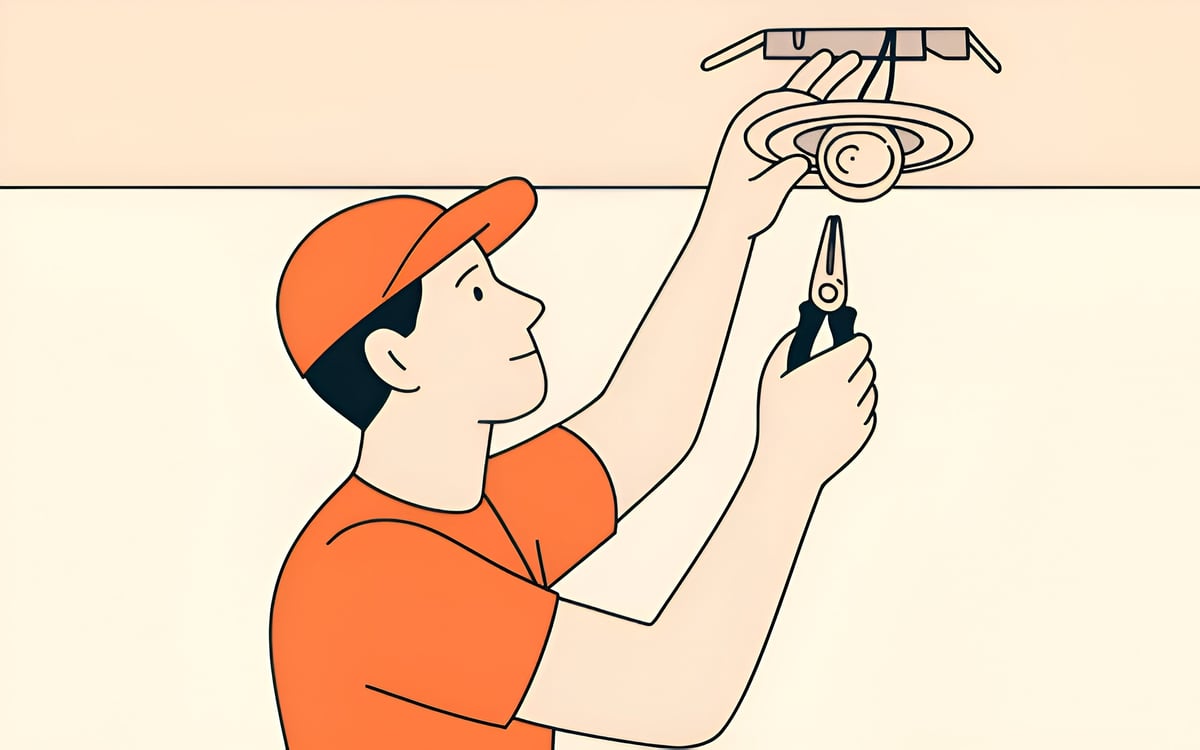
Worker in orange hard hat and shirt installing or repairing a ceiling sprinkler head with a tool

A professionally installed system is designed to operate safely, look clean, and provide dependable lighting for years. Choosing a fast, quality, and trusted installation partner means getting the job done right the first time. If you're ready to get started, book an appointment now.

Services That Often Go Hand-in-Hand

Recessed lighting installation is often completed alongside other lighting and electrical upgrades during the same visit. Many homeowners combine projects to save time and get more done in a single visit.

These improvements work together to create a better-lit and better-protected home. Homeowners who want ongoing maintenance and peace of mind can learn more about our yearly plans. Regular electrical maintenance helps ensure everything runs safely and reliably year after year.

Is Recessed Lighting Worth It?

For many homeowners, yes. Recessed lighting can improve how a room looks, feels, and functions every day. It is especially useful in spaces that feel dim, dated, or crowded with lamps and fixtures. While recessed lighting cost varies based on the scope of work, most homeowners find it a worthwhile upgrade when the layout is planned well and the installation is done right.

For homeowners in Duluth, Suwanee, Johns Creek, Alpharetta, Buford, Roswell, Cumming, and nearby North Atlanta communities, recessed lights are a practical way to improve everyday lighting while giving the home a cleaner, more modern look. Whether you need a recessed lighting electrician or are searching for a residential electrician for broader lighting installation, a layout that is properly planned and professionally installed gives you one less thing to worry about.

The best way to determine what's right for your property is through an evaluation that considers your ceiling, electrical system, and lighting goals. Working with a fast, quality, and trusted electrical team means getting honest recommendations about what you actually need, not a one-size-fits-all solution.

For homeowners who need assistance, Hot Spot Electrical provides recessed lighting installation, dimmer switch installation, smart switch installation, under-cabinet lighting, ceiling fan installation, dedicated circuit for recessed lighting when needed, and electrical panel upgrades throughout the region. Whether you're looking for recessed lighting installation, lighting design and installation, whole-home surge protection, or electrical troubleshooting, we focus on quality workmanship, honest recommendations, and installations designed for long-term reliability.

Hot Spot Electrical | 3935 River Run Ct., Cumming, GA 30041

(678) 771-6085

Frequently Asked Questions