Electrical Panel Pricing Guide
Most homeowners pay between $1,300 and $3,500 to replace an electrical panel, with the national average landing near $2,000. The panel and breakers themselves typically run $500–$1,500, while labor, permits, and any necessary service upgrades make up the difference. A straight swap in the same location costs far less than a job that requires a larger service, new meter hardware, or bringing old wiring up to current code.
Upgrading from 100 to 200 amps costs more than a like-for-like replacement, but adds capacity for modern appliances and future loads.
Quality panels and breakers cost more up front. Certain obsolete panels that are known safety hazards must be replaced entirely.
A panel in a finished basement, tight closet, or exterior wall takes longer to access and replace, raising the labor portion of the job.
Panel replacements almost always require a permit and inspection, adding a fee but keeping the work safe, legal, and insurable.
If the service entrance, meter base, or main disconnect must be upgraded to match the new panel, the price climbs significantly.
Bringing grounding, bonding, or double-tapped breakers up to current code can add cost, especially in older homes.
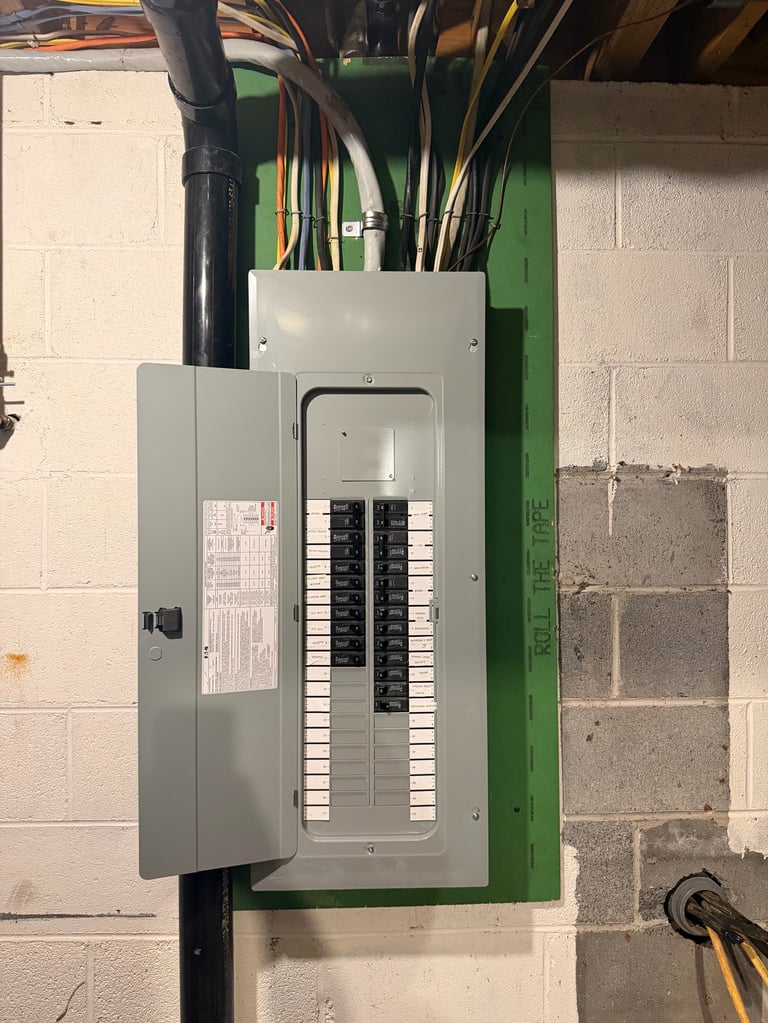
Here's a breakdown of what you can expect to pay for common electrical panel replacement scenarios in North Atlanta:
Ask for itemized pricing on the panel, breakers, labor, permits, and any code corrections so you can compare quotes accurately.
Choosing a 200-amp panel now can avoid a second upgrade later for an EV charger, hot tub, or new appliances.
Combining a panel replacement with surge protection or circuit additions saves on mobilization and permit costs.
Hiring a licensed pro ensures the job is done right the first time, passes inspection, and keeps your home's insurance valid.
Cutting corners on an electrical panel replacement can put your home and family at risk. Keep an eye out for these warning signs:
Most homeowners pay between $1,300 and $3,500, with the national average around $2,000. The final price depends on panel size, brand, location, whether a service upgrade is needed, and any code corrections.
A straightforward panel replacement usually takes four to eight hours. If a service upgrade or extensive code corrections are involved, the job can run a full day or more.
Yes, panel replacements almost always require a permit and inspection. A licensed electrician handles the permitting process and ensures the work passes inspection.
If your home still runs on a 100-amp service, upgrading to 200 amps is often smart, especially if you plan to add an EV charger, hot tub, or larger appliances. It adds capacity and avoids future upgrades.
Warning signs include frequent tripped breakers, flickering lights, burning smells, rust or corrosion, warm panel covers, and outdated or recalled panel brands. A licensed electrician can confirm whether repair or replacement is the safer choice.