Electrical Panel Insurance Guide

Will Homeowners Insurance Pay for a New Electrical Panel?

The short answer: usually no for routine wear and tear, but sometimes yes after a covered event. Standard homeowners insurance generally does not pay to replace an aging or outdated panel just because it is old. However, if a covered peril such as a fire, lightning strike, or power surge damages the panel, that loss is often covered, minus your deductible. Some older policies or riders may even help with code-required upgrades after a claim.

What Affects Coverage

Cause of Damage

Insurance responds to sudden, accidental events like fire, lightning, or surges, not to gradual wear, rust, or an aging panel.

Maintenance History

Insurers can deny a claim if the damage resulted from neglected maintenance or a known hazard you failed to address.

Your Policy Type

HO-3 and HO-5 policies cover many perils, while some older or basic policies exclude certain electrical losses. Read your exclusions.

Code Upgrade Coverage

Some policies include ordinance or law coverage, which can help pay for code-required upgrades after a covered loss.

Deductible

Even a covered loss is reduced by your deductible, so smaller replacements may not be worth filing a claim over.

Documentation

Photos, an electrician's report, and proof of the cause strengthen your claim and help an adjuster process it quickly.

What's Typically Covered vs. Not

Here's a general breakdown of how homeowners insurance usually treats electrical panel replacement in North Atlanta:

  • Covered: panel damage from fire, lightning, or a burst pipe
  • Covered: a sudden surge that destroys the panel and connected equipment
  • Usually not covered: replacing an old or outdated panel as routine upkeep
  • Usually not covered: an upgrade done purely to add capacity or convenience
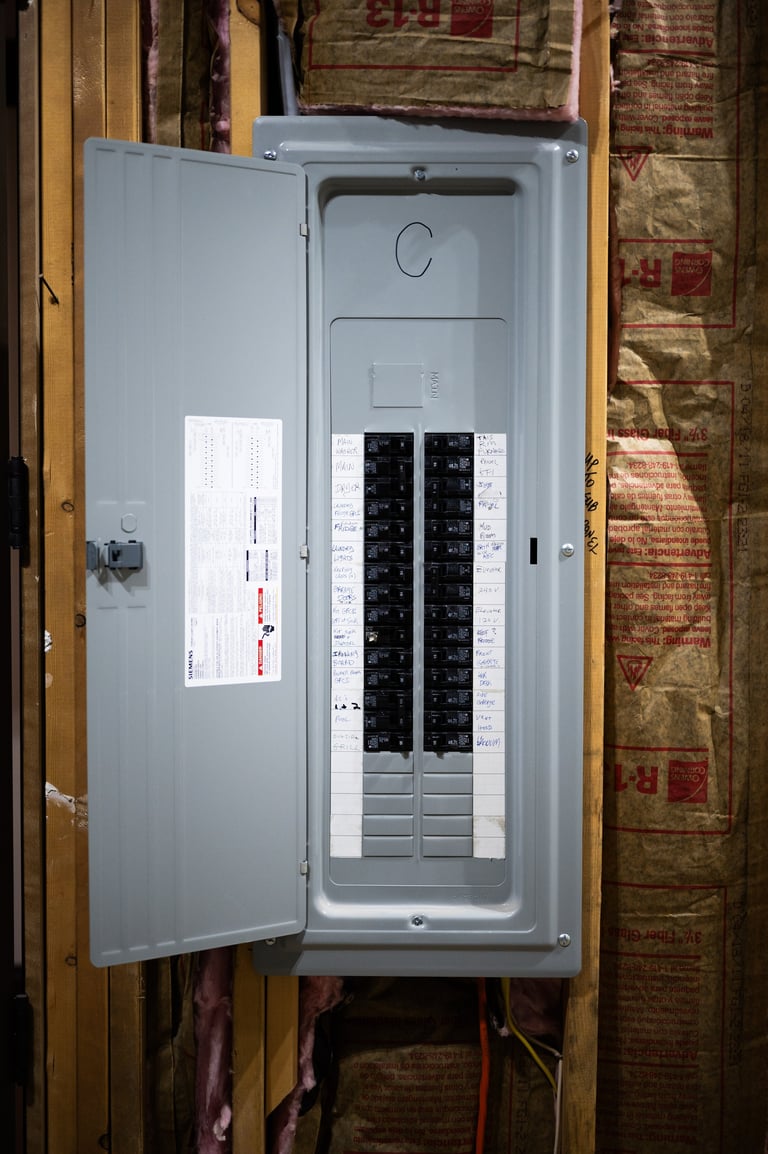
Gray electrical panel box mounted on wooden wall with open door showing circuit breakers and documentation label inside

How to Get Your Panel Covered

1

Document the Damage

Take photos and notes right away. Clear evidence of a sudden, covered event is the strongest part of any claim.

2

Get a Professional Report

A licensed electrician can document the cause and scope, which adjusters rely on to approve the claim.

3

Ask About Ordinance Coverage

Check whether your policy includes ordinance or law coverage, which can pay for code-required upgrades after a loss.

4

Weigh the Claim

Filing a claim can raise your premium. If the deductible is close to the repair cost, paying out of pocket may make more sense.

When Cheap Becomes Expensive

Delaying a necessary panel replacement or cutting corners can void coverage and put your home at risk. Keep an eye out for these warning signs:

  • Bids far below everyone else's
  • No permits, insurance, or license verification
  • Ignoring known hazards like a recalled panel
  • No written scope or warranty on the work
Tan RAM ProMaster camper van with open roof extending platform parked under trees in wooded area

Related Electrical Services

Areas We Serve

Frequently Asked Questions