Light Fixture Installation Guide

Do I Need an Electrician to Install a Light Fixture?

In most cases, yes, if you want it done safely. Georgia law requires a licensed electrician for any work that involves running new wiring, adding a circuit, or opening up a panel. A straight fixture swap in an existing box is something a confident homeowner can often handle, but anything beyond that is where DIY starts costing people real money. For Cumming and North Atlanta homeowners, hiring a licensed electrician typically runs $125 to $350 per fixture, and it removes the risk of shock, fire, and failed inspections.

At Hot Spot Electrical, we install light fixtures and lighting systems across Cumming and the North Atlanta area. We will tell you honestly whether your project is a simple swap or something that truly needs a licensed hand, and we quote the job in person before we start.

When You Need an Electrician and When You Do Not

Not every lighting job is the same. Here is how the decision usually breaks down for homeowners in Cumming, Alpharetta, and the surrounding North Atlanta area:

Same Box, Same Wiring

Replacing a light with an identical or similar fixture in the same box is a task many homeowners can manage, though we still recommend a licensed check if it is on a dimmer or a heavy fixture.

New Wiring or New Circuit

Adding a light where none exists means fishing cable, tying into a circuit, and often a new switch. This is licensed work by law and by common sense.

Heavy or Oversized Fixtures

Chandeliers and large pendants need a box rated for the weight and sometimes a brace installed from above. Getting this wrong is a real safety problem.

Old or Unknown Wiring

If your home has aluminum wiring, cloth covered cable, or a panel with no clearly labeled circuits, a pro should look before you touch anything.

Bathrooms, Kitchens, Outdoors

Wet and damp locations require rated fixtures, proper grounding, and often GFCI protection. These areas leave no room for shortcuts.

Permits and Insurance

Unpermitted electrical work can complicate a home sale and give an insurer a reason to push back on a claim. Licensed work keeps your coverage intact.

What a Licensed Electrician Actually Does

A licensed install is not just hanging a fixture. Here is what the job really includes when we handle it:

  • Kills the power and verifies it: confirmed at the breaker, not just at the switch, before anything is touched
  • Checks the box and rating: confirms the electrical box can carry the fixture weight and the wire gauge matches the load
  • Grounds the fixture properly: a step DIY videos often skip and one that protects both you and the fixture
  • Aligns and secures the connection: correct wire nuts, torque, and no exposed copper so nothing loosens over time
  • Tests the circuit and the switch: including dimmers, three way switches, and any smart devices you added

Most single fixture installs are done in under two hours, and you walk away knowing the work is code compliant and warrantied.
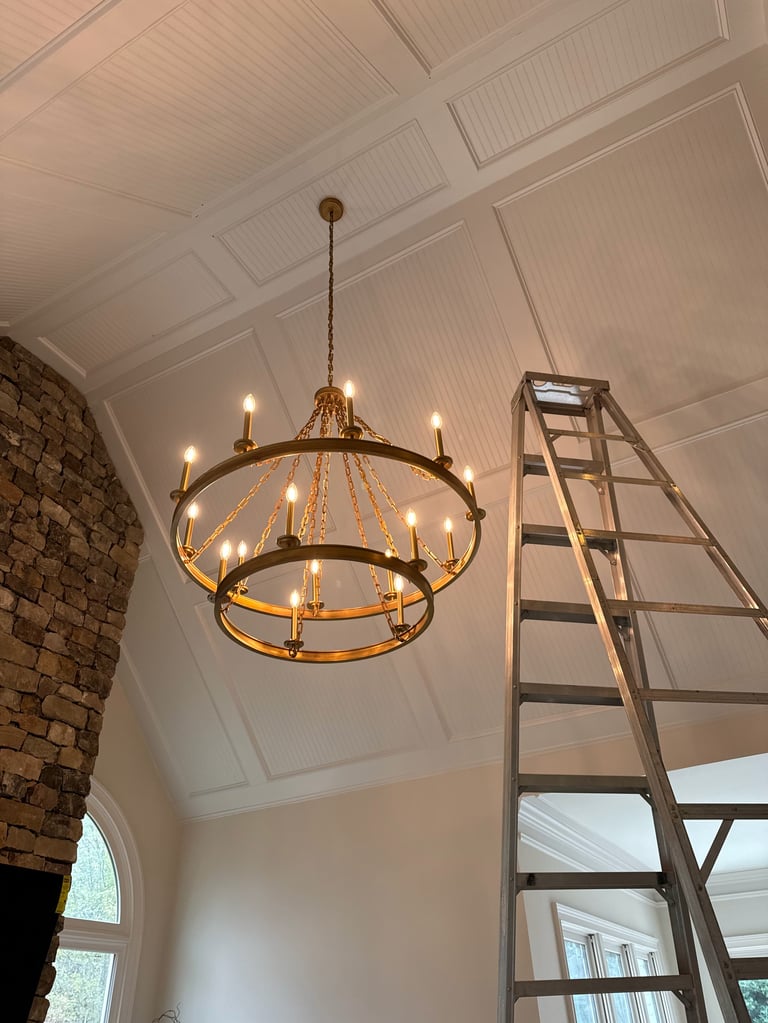
Two-tier gold chandelier with white candle bulbs hanging from a coffered ceiling beside a tall wooden ladder and stone wall

How to Decide on Your Light Fixture Install

1

Identify the Type of Job

Is this a swap in an existing box or a brand new light with new wiring? That single question decides most of it. We can tell you in a quick call which one you are looking at.

2

Look at the Box and Wiring

Check the fixture box for a weight rating and look at the wire condition. Cracked insulation, scorch marks, or aluminum wiring mean stop and call an electrician.

3

Weigh Your Time and Risk

A licensed install usually costs less than you expect and takes under two hours. Compare that to a full afternoon on a ladder and the risk of a mistake behind the wall.

4

Bundle the Whole Room

If you are updating lighting, do the whole room in one visit. Adding recessed lights, a dimmer, and a ceiling fan together costs far less than separate appointments.

When Cheap Becomes Expensive

A bargain install can cost you far more than the few dollars you saved. These are the warning signs worth walking away from:

  • No license number, insurance, or written estimate before work starts
  • A fixture hung from a box that is not rated for the weight
  • No ground wire connected, or wire nuts left loose behind the wall
  • A new light tapped into an already overloaded circuit with no load check
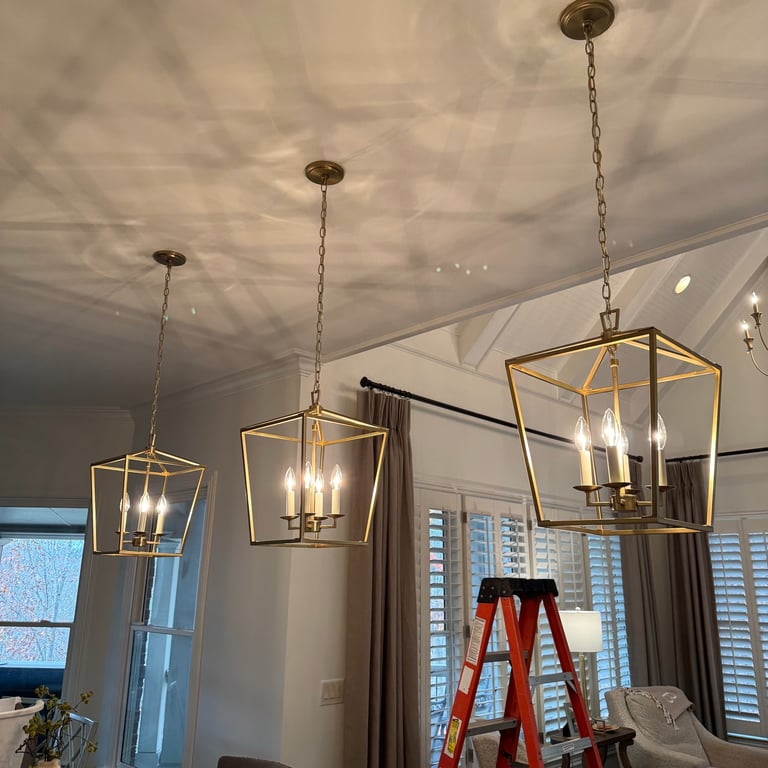
Three gold geometric lantern pendant lights hanging from a vaulted ceiling in a room with white shutters and gray curtains

Related Electrical Services

Areas We Serve

Frequently Asked Questions