Adding a Light With No Wiring Guide

How to Install a Light Without Existing Wiring?

The short answer: you cannot power a light without a wire. A fixture needs a live circuit, so installing a light where none has ever been means running new cable from an existing power source to the new location. In Cumming and North Atlanta, that work typically runs $300 to $700 when the power can be pulled from a nearby circuit, and $500 to $1,200 or more when a brand new circuit has to be added at your electrical panel.

Because that cable has to be routed, protected, and connected to code, this is not a hang it and hope job. At Hot Spot Electrical we run new lighting circuits across Cumming and the North Atlanta area every week, and we quote the route in person so you know the real number before we open a single wall.

How Power Actually Gets to a New Light

There are only a few honest ways to power a light where no wiring exists today. Which one applies to your home depends on what is nearby and how much room the circuit has left:

Pull Power From a Nearby Circuit

The cheapest route. If a receptacle, switch, or existing light on the same circuit is close, cable can often be extended from it instead of going back to the panel.

Run a Dedicated Circuit

When the nearby circuit is full or the load is heavy, a new breaker and a home run back to the panel is the correct answer. That is the larger version of this job.

Route the Cable Cleanly

Attic, crawlspace, or a short wall chase. Cable has to be protected where it is exposed and kept away from heat and sharp framing. The route is where labor is won or lost.

A Proper Box and Support

Every fixture needs a listed box, correctly sized for the wire count and anchored to framing. A ceiling fan needs a fan rated box, not the old light box that was there.

The Switch Leg

New cable does not just go to the light, it has to reach a switch you can use. Where the switch sits decides how much wall gets opened up.

Permits and Inspection

Adding a circuit or new wiring generally requires a permit in Georgia. It is not a formality. It is what protects you if something fails later or you sell the house.

Typical Costs for New Wiring to a Light

Here is what this work usually runs for North Atlanta homes:

  • Extend from a nearby receptacle: $300 to $550, when the circuit has capacity and the path is easy
  • Single new light and switch from the attic: $450 to $700 with clean fishing and minimal patching
  • New dedicated circuit back to the panel: $550 to $1,200, includes breaker, cable, and panel work
  • Recessed lights in a room with no existing cans: $150 to $350 per can once the circuit is there
  • Panel upgrade if there is no space left: $1,500 to $4,000, and sometimes unavoidable
  • Drywall patching and paint: Often separate. Ask up front whether it is included in the quote

A single new light with a clean attic route is usually a half day. Opening finished walls, cathedral ceilings, or a panel that is already full can turn it into two visits. We tell you which one you have before we start.

Technician in a navy polo and tool belt holding a cable above a black projector-style fixture on an orange lift in an arena

How to Keep the Cost Down

1

Put the Light Near Power

If the layout is flexible, placing the fixture close to an existing receptacle or switch cuts cable length and wall work dramatically.

2

Use the Attic or Crawlspace

A single story home with open attic access is the best case. Cable fished from above costs a fraction of opening finished walls and patching them back.

3

Bundle the Whole Room

Once we are in the attic and the circuit is run, adding the second and third light is far cheaper than calling us back three separate times.

4

Go LED to Protect Your Panel

LED fixtures draw a fraction of the amperage. That is often what decides whether you need a new circuit at all.

When Cheap Becomes Expensive

A shortcut on new wiring is one of the few home projects that can hurt someone. These are the warning signs worth walking away from:

  • Lamp cord or extension cord run through a wall or ceiling to feed a fixture
  • A new light tied onto a circuit with no load calculation and no idea what else is on it
  • Cable stapled loosely, unprotected in the attic, or sitting on top of insulation
  • No permit, no license, no insurance, and no plan for what happens if the ceiling catches
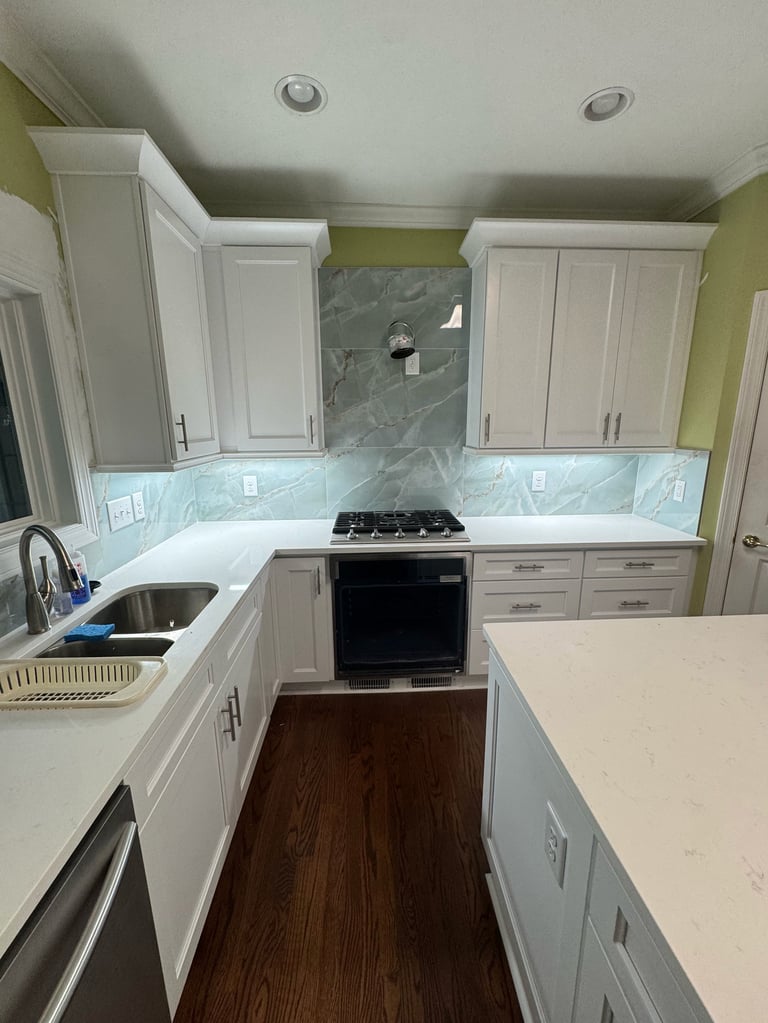
Bright kitchen with white shaker cabinets, white quartz countertops, marble-look backsplash, black gas range, and dark hardwood floors

Related Electrical Services

Areas We Serve

Frequently Asked Questions