DIY Lighting Installation Guide

Can I Install Lighting Myself?

Short answer: sometimes, and only for the simplest swap. If a light box already exists and the wiring is known to be sound, swapping a fixture is a job many careful homeowners can handle. But the moment you are adding new wiring, moving a light, cutting in recessed cans, or touching anything inside the panel, the answer is no. In Georgia, that work has to be done by a licensed electrician and typically permitted and inspected.

At Hot Spot Electrical we are called out to fix DIY lighting in Cumming and across North Atlanta regularly, and the pattern is consistent: the fixture itself is rarely the problem, the wiring behind it is. A licensed lighting install runs $150 to $350 per fixture, which is far less than repairing what a bad connection costs later.

What You Can and Cannot Do Yourself

Most lighting projects fall into one of two buckets. Here is where the line sits for a typical North Atlanta home:

A Straight Fixture Swap

Same location, same box, same wires, same switch. Power off at the breaker, verified with a tester. This is the one lighting job that is genuinely homeowner territory.

Any New Wiring

Fishing cable, adding a switch leg, or tapping a circuit is licensed work in Georgia. It needs the right cable type, protection, box fill, and usually a permit.

Recessed Can Lights

Cutting holes in a ceiling is irreversible, and every can has to be rated for the insulation and the location. Layout mistakes are visible forever.

Ceiling Fans and Heavy Fixtures

Fans and chandeliers need a fan rated or braced box anchored to framing. Hanging one from an old light box is a failure waiting to happen.

Bathrooms, Kitchens, Outdoors

Wet and damp locations, GFCI protection, and vapor barriers all change the rules. These areas have the least tolerance for a guess.

Anything With a Permit

If the job requires an electrical permit, it requires a licensed electrician to pull it and do the work. That is true across Georgia and it is not negotiable.

What DIY Lighting Actually Costs

DIY looks cheaper on paper. Here is how the real costs usually compare for North Atlanta homeowners:

  • DIY fixture swap: Fixture cost only, plus tools, ladder, and an afternoon
  • Professional fixture swap: $125 to $350 each, usually done right the first time
  • Professional new lighting run: $300 to $700, plus permits where required
  • Fixing a bad DIY connection: $200 to $600, often more once the box has been damaged
  • Drywall repair after a wrong cut: $150 to $500, plus paint, and rarely covered by insurance
  • A fire claim traced to unpermitted wiring: Deductible, premiums, and possibly a denied payout

In other words, DIY only pays off when the job is genuinely a swap. On anything that touches wiring, the savings evaporate the first time something has to be redone.
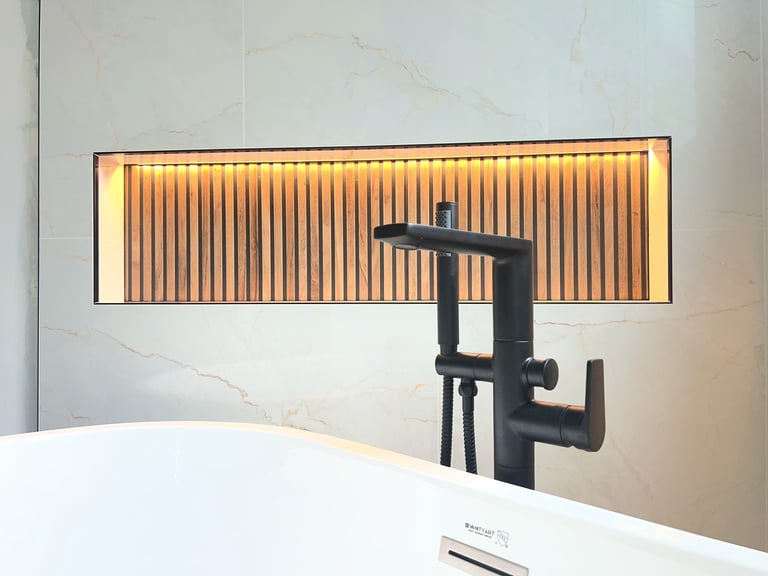
Matte black freestanding bath faucet with handheld shower beside a white tub, in front of a backlit wood-slat wall niche in a marble-look bathroom

How to Decide If You Should Do It

1

Confirm the Wiring Already Exists

If there is already a box and a switch controlling that exact spot, you are in swap territory. If you are cutting anything, stop and call.

2

Look Hard at What Is in the Box

Cracked insulation, scorch marks, aluminum wiring, or a tangle of unmarked conductors means the job is bigger than a swap. That is a diagnosis, not a DIY project.

3

Weigh Your Time Honestly

A confident swap is an hour. A first attempt with the wrong box, wrong wire nuts, and a second trip to the store is a whole weekend.

4

Consider Resale and Insurance

Unpermitted electrical work can surface during a home inspection and complicate a claim. A documented professional install protects the value of your home.

When Cheap Becomes Expensive

Bad lighting work does not usually announce itself. It waits. These are the signs that something needs a licensed set of eyes:

  • Lights that flicker, dim, or buzz after being installed
  • Warm or discolored switch plates and outlet covers
  • A breaker that trips whenever the new lights come on
  • Wire nuts taped over, ungrounded fixtures, or cable that does not run to a box
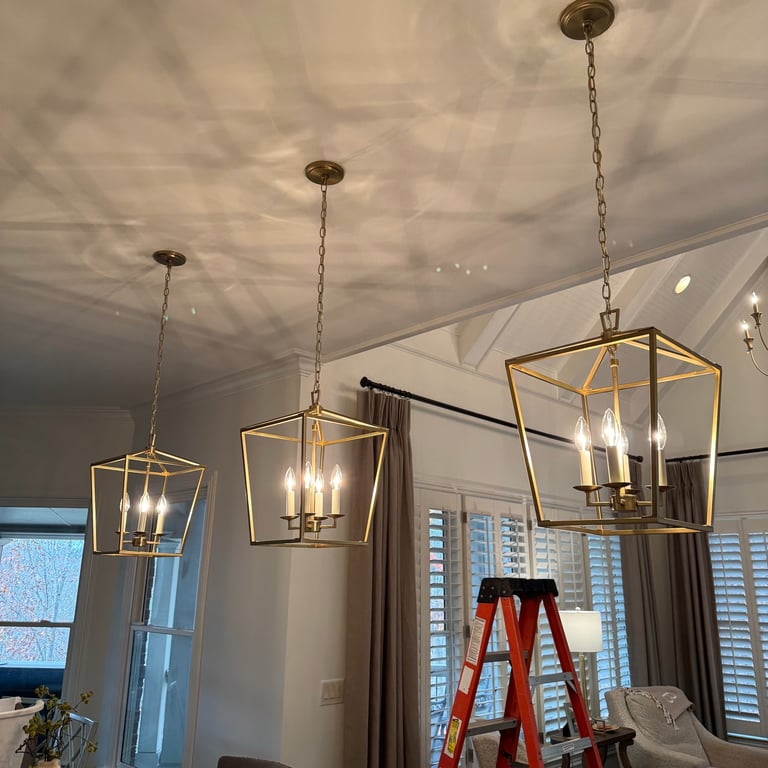
Three gold geometric lantern pendant lights hanging from a vaulted ceiling in a room with white shutters and gray curtains

Related Electrical Services

Areas We Serve

Frequently Asked Questions